Romance Reader event Sunday 8 March

On Sunday 8 March, I’ll be one of the authors at the Australian Romance Readers Association’s multi city author and reader event. I’ll only be in Sydney, but there are so many wonderful authors (including international guests) at all the events.

The Sydney event is at the Castlereagh Boutique Hotel, 169 Castlereagh Street, Sydney (just down the road from Hyde Park) from 1 to 5pm.

I’d love to see you there if you could make it. Tickets for the day are only $20.00 (or $45 for a VIP ticket that includes a souvenir booklet and other items). Most importantly, all the authors would love to see you at the event so we can talk books and reading.

There will be books for sale, but if you already have copies, I’d love to sign them for you!

Click here for a link to tickets!

ARR2020 author banner Penelope Janu.jpg

Legal Beagle: How Much is that Doggie in the Window?

I write a column for the writing group Romance Writers of Australia (about laws that might be of interest in our writing). A recent topic was about custody of pets. And here it is!

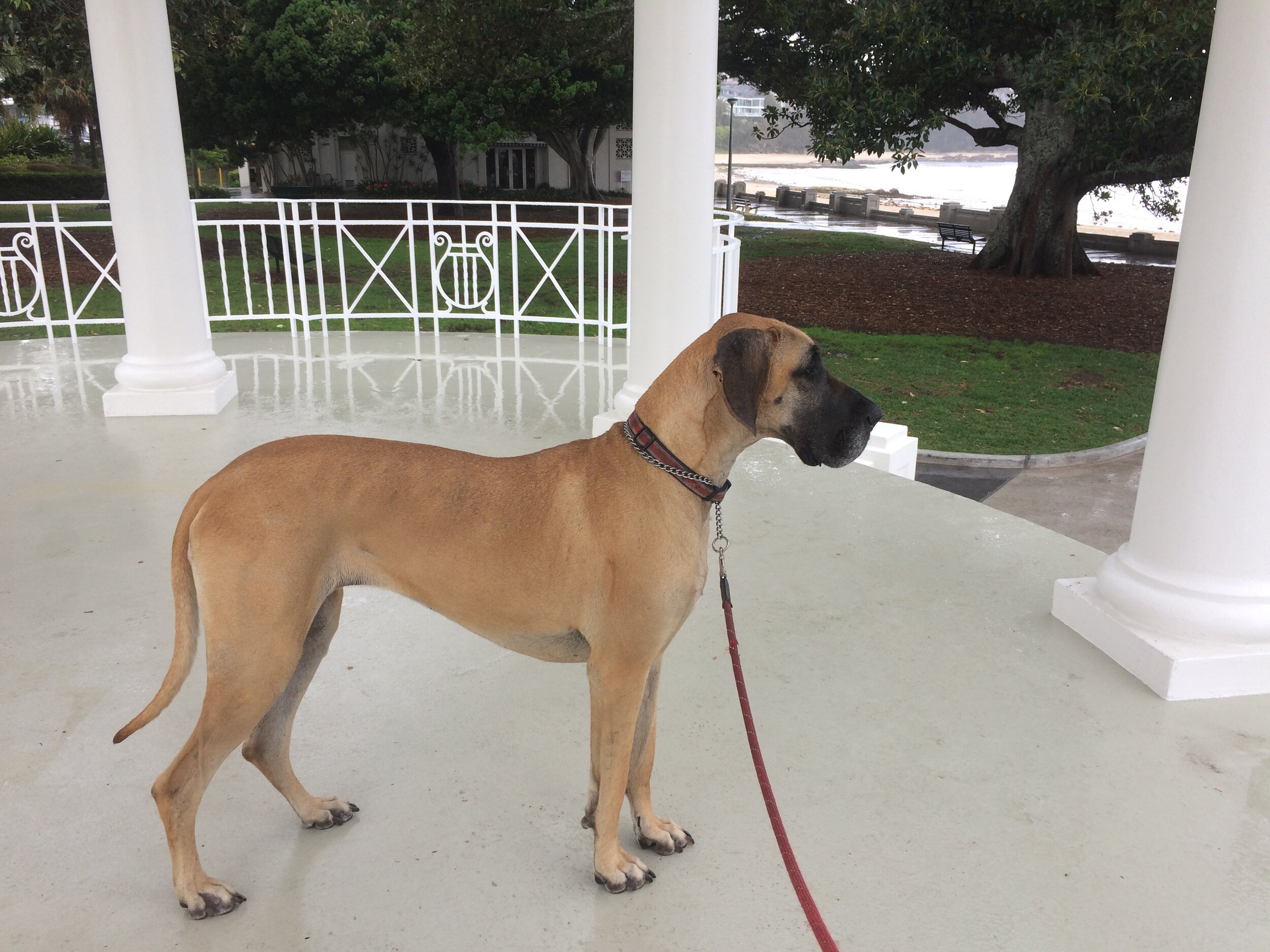
Daphne Dane (not for sale, by the way!)

Daphne Dane (not for sale, by the way!)

How much is that doggie in the window, the one with the waggly tail,

How much is that doggie in the window, I do hope that doggie’s for sale …

In a recent divorce case, a husband offered his wife $20,000 in consideration for her agreeing that their dog would live with him. Her response? That no amount of money could induce her to hand over the dog, because it would be like selling a member of her family. In the case of a much loved animal, horse or dog or cat or goat or guinea pig, I think many of us can relate to this sentiment.

So … what happens to a pet that both parties want to keep when a couple separate? Who gets custody? There are marked differences between the law in Australia in this area, and some States in the US, so if you’re setting your story in another jurisdiction, take care to check the law there. This month’s Legal Beagle will look at Australian law first, and then the law in the US, because there’s a chance that Australian law might eventually head in this direction.

Case scenario: Jacquie and Jonathon have been married for thirty years, but have recently separated, and have applied to the Family Court for a divorce. Their adult children left home years ago, but they still have a family dog, JimBob, a five year old Staffie. Jacquie bought JimBob for her and Jonathan’s twenty-fiftieth wedding anniversary, but the dog is registered with the local council in her name. She takes him for walks occasionally, buys his flea and tick treatments, feeds him, cleans up after him, and takes him to the vet when necessary. JimBob is a lazy dog, and his favourite activity is to sit on Jonathan’s knee while he watches West Coast Eagles AFL games, and the cricket (particularly five day test matches). JimBob sleeps on Jonathan’s side of the bed.

Both Jacquie and Jonathan want JimBob to live with them, and each thinks this arrangement will be in JimBob’s interests. As this matter relates to divorce, it will be regulated by the Commonwealth Family Law Act 1975 (this Act applies to all states and territories): Click here for the legislation!

The law in Australia wouldn’t decide this case as a custody matter, because pets under the law are considered items of personal property (a chose in possession, to use the old fashioned term). This means JimBob’s ownership, and who he lives with, will be treated in the same way as furniture, tools, a computer or any other property asset. The concept of who owns the ‘property,’ and the economic value of the ‘property,’ will be taken into account by the courts in assessing who gets what when other property is divided up. Unlike children, there is no legal framework for dealing with custody or living arrangements for a pet, so if this matter goes to court, JimBob will be just another item on a list of property assets.

But before a matter gets to court for a property division, what if Jonathan takes JimBob to live with him in WA (Jacquie stays in SA)? To have JimBob returned to her care, she would have to apply to court for his ‘recovery’ (in the same way she’d petition the court if Jonathan took her late grandmother’s Lladró collection). If JimBob is still living with Jacquie, but she is concerned that Jonathan might take him out of her garden while she is at work, she could apply to the court for a ‘Declaration,’ a court order setting out a decision regarding the correct law on a matter.

Is there a way to avoid court and the associated expense and emotional turmoil? Ideally the parties come to an informal agreement. And if that isn’t achievable, mediation may be possible. The only trouble with agreements and mediations however, is that they aren’t legally enforceable, so the only way to have certainty is by going to court and applying for a Consent Order (where the court approves an agreement between the parties, so it has the force of a court decision). Alternatively, one or both parties apply to the court for a Property Order, which deals with all the property. The facts set out above (who feeds JimBob, who has the greatest attachment to JimBob etc.) would help a court to decide who is most attached to the ‘asset,’ and who has the best claim over it.

What would happen if Jonathan and Jacquie had dependent children? Children will be relevant in deciding the living arrangements of a dog, because the ‘best interests of the child’ will always be foremost in a judge’s mind. There have been cases where a judge has decided that the pet should remain with the children, and this means the pet goes wherever the children go. The dog is still seen as ‘property,’ but property that is important to the emotional wellbeing of the child. This is an approach that Jonathan and Jacquie might favour anyway, because they’re likely to love their children and their pet.

Now for a quick look at US law: An act was recently passed in California, which differentiates companion animals from other types of property, and allows people to apply for sole or joint custody of a pet. The judge will decide the case based on the ‘best interests of the animal’ (in the way the court decides a case in the best interests of a child. See: https://leginfo.legislature.ca.gov/faces/billTextClient.xhtml?bill_id=201720180AB2274

In Alaska, the law states that a court has to take an animal’s welfare into consideration if parties separate (so the consideration is what is best for the animal, not the owners). A judge may also assign joint custody. If one party refuses to hand over possession in the case of joint custody, the court can order them to do so. There are many thought provoking cases in this area, and plenty of scope for conflict as well!
South Coast Bush Fires

The aftermath

The aftermath

My friend, novelist Pamela Cook, recently wrote a post about the impact of bushfires on her family and many other families in the south coast of NSW. Thanks so much Pamela for sharing your story (there’s a link to Pamela’s website below, so you can find out more about Pamela and her writing).

Out of the Ashes

By Pamela Cook

The Christmas-New Year Fires have been a devastating experience for so many people in NSW and Victoria. It’s been a time of reckoning as we come face to face with the effects of the long-running drought and the impact of climate change. Having had a life-long association with the south coast, I wanted to share my family’s experiences during this time and express our gratitude to the amazing women and men of the RFS (Rural Fire Service) for their tireless efforts over this horrible period. 

Screen Shot 2020-02-05 at 9.36.05 pm.png

 It’s a dull Tuesday afternoon and I’m driving the familiar route south on the Princes Highway for the first time this year. The fall of rain on the windscreen is annoying enough to need the wipers but barely there. I’m heading down to visit my daughter, her partner and my grandson, to do my bit to boost the local economy with a spot of retail therapy and to witness the havoc that’s been wreaked on my favourite part of the world by the new year fires. Adele sings something mournful on the radio. The dreary weather matches my mood and the landscape, and as I leave the industrial fringe of Nowra behind me, the tension in my neck and shoulders travels to my grip on the steering wheel.

My destination is the family holiday house at Little Forest we’ve owned for 20 years – we spent our first Christmas holiday there when I was pregnant with my youngest daughter. Many of my happiest memories spring from lazy days and summer weekends, blissfully endless school breaks spent in our timber house tucked beneath the escarpment, overlooking the Morton National Park. Our eldest has lived there permanently for almost five years. She runs a horse training business on the property with her partner and is raising her son in the place she now calls home. It’s the place where we all began horse-riding, where the desire to write first itched at my fingertips, where my first published novel Blackwattle Lake was set, where we’ve spent enough time to feel like locals. My connection to the area goes way back to my childhood when my family rented a house every year for three weeks at Burrill Lake. I’d spend hours and days beach-combing, floating on my airbed in the blistering summer sun, eating Jaffas at the open air picture theatre where we took blankets and pillows to watch movies under the stars. Every trip down here is a home-coming, a long slow exhale as the busy-ness of life in Sydney gives way to the soothing calm of the bush and the mesmerising whispers of the ocean.

Screen Shot 2020-02-05 at 9.35.36 pm.png

But this drive, this visit, is different. Dread anchors itself in the shallows of my stomach. A month ago my husband and I were planning a relaxing week here with the family. Instead he dealt with the chaos of the fires while two hours to the north I tended to evacuated horses, dogs and people. I minded the little man while his parents packed as many belongings as they could into their cars, watched houses at the eastern end of the road burn while their helpless – and now homeless – owners looked on, sobbing. We spent New Year’s Day in a state of no-so-mild panic, unable to contact them after they’d been stranded in town, the roads blocked as the fires spread. Cobargo had already burnt, Mogo too. As hard as it was to contemplate, it wasn’t out of the question that Milton could come under attack. Communications were out, there was no petrol, no power. People queued outside supermarkets waiting to be led into the store by a shop assistant with a torch to choose a maximum of six items. Low lying clouds of smoke suffocated the town. Thousands of hectares of bushland burned, closing roads and businesses. Flames spread through the valley below our house, almost but not quite reaching our property. As soon as they could travel north my daughter’s little family did, returning days later with my husband to man hoses and put out the many spot fires snaking through the undergrowth.

Screen Shot 2020-02-05 at 9.35.20 pm.png

Then came that Saturday. Our neighbour, a fireman, advised my daughter and her partner not to stay given the aged timbers of the house so they got out while they could. Despite the dire situation all I could feel was relief to have them all home under my roof. Together, we sweltered indoors as we sat glued to the TV or listened in to the RFS radio, trying to glean any information we could about what was happening, not just to our house, but to the homes of friends in the area. We kept watch on the Fires Near Ae app as the burn zone closed in around the house. Then, the news we’d dreaded: the fire was back at Little Forest and this time it had reached our end of the road. Hours passed until finally neighbours who had made the decision to stay sent through photos. By some absolute miracle – and with the combined efforts of neighbours and fire-fighters – our house had been saved. Most of the paddocks were scorched, the trees and gardens and fencing all burnt but somehow the house remained standing. The fire had been and gone leaving a trail of devastated bushland in its wake. Powerlines were down and the tank was full of ash so any return to the house had to wait. Their horse-training business had now been on hold for a month and the bank balance was dwindling so as soon as it was possible my daughter headed back to resume her part-time job in town. For days she lived with no electricity and no running water but at least there was a roof over her head and four solid walls keeping her safe. She spent the hours before work clearing the debris – melted buckets and the charred remains of a bower bird,

I keep driving but switch the music off, silence a more appropriate soundtrack. The white trunks of the towering gums flanking the highway soon give way to long stretches of sepia toned forest, the undergrowth stripped bare, the earth beneath them charred and barren.  By the time I reach the Sussex Inlet turn off I’m driving through a wasteland. News images of a policeman screaming at motorists to turn back as the flames around him fly skyward flicker in my head. I stare at the remains of trees in exactly the same location. Here, everything is black. Leafless branches claw the sky. Houses ordinarily out of sight from the road, now sit exposed, naked. I pass the turn off to the well-loved Yattah Yattah nursery, reduced to rubble, where the 80-year-old owners lost their beloved dog, their home and a business they will probably never rebuild. Impossible patches of green snatch my breath, and as I inch closer to Milton wider sections of paddocks and the familiar sight of grazing cows are salves for my wounded spirit. The dragon’s hot breath spewed out at random, devoured everything in one pocket, leaving the next patch unscathed.

As afternoon evaporates into evening I turn onto Little Forest Road. I’ve seen photos of the street, our house, but nothing has prepared me for this reality. My daughter calls. Where are you, she says. I don’t know, I say. On another planet, I add. In a warzoneWell, don’t stop along the road to take any photos, she replies. Trees are still falling. My throat is as dry as the scene before me. Houses I’d driven past and admired for years are now nothing but piles of brick and twisted mounds of corrugated tin. Others homes are in tact but surrounded by blackened trees, a testament to the bravery of their owners and the fire-fighters. I hit the stretch of national park that reaches all the way up to the escarpment. A tree-army of charcoaled skeletons stand soldier-straight on both sides of the road. It’s a landscape of death and destruction. This is crazy, I whisper to the world as I wind up the hill towards our house. I look for the lyrebird who so often scurries across the road on the bend, see nothing but ash and broken branches littering the asphalt. Dead leaves line the verge – if this was autumn and they weren’t gum leaves the sight would be quite beautiful. At the top of our driveway I stop to look out across the valley. When we’d first seen this house the stunning views of state forest melting into farmlands and the distant stretch of sea drew us under its spell. I look out now across a foreign landscape, scorched hectares of bush that surely cannot sustain life and the tears finally fall. How much wildlife has been lost? How will the bush ever recover?

With rain brings hope

With rain brings hope

Miraculously at least half of our paddocks are lush and intact, but the fences and gardens are gone. Rebuilding will take time, but it will happen. We’ve been luckier than so many others who have lost homes, and in some cases their lives or loved ones. Down the road a few kangaroos munch on the grass in a neighbour’s paddock. My daughter makes strings of corn cob and sweet potato for the possum who now visits each night.  My grandson stands at the window looking out at the scarred bushland. Smokey, he says, then Fire. It’s not, and there isn’t one, but his budding vocabulary has two new words I’d rather it didn’t contain. After a couple of solid downpours of rain new grass is sprouting. Rosellas perch in the branches of the still-green apple tree and feed on the blossoms, a stark contrast to the blackened fig, grevilleas and camellias standing alongside. Cows graze on the hills across the way. The surrounding houses are occupied again with neighbours we’ve come to know much better over the last few weeks. Life is returning to normal, or at least a new normal with tank water that tastes and smells like ash. Do Not Feed the Wildlife signs deter tourists from encouraging animals to the roadside where they can be killed, and a drab patchwork of bush leaves an ache rather than a song in my heart.

Screen Shot 2020-02-05 at 10.00.18 pm.png

I wrote Blackwattle Lake in 2009, drawing on my own experience of being stuck in Milton when fire erupted north of the house, and the Black Saturday bushfires of the previous year were still fresh in my mind. What if the fires did come close?I wondered. What if the road was blocked when you were at home, and not in town? What if you were stuck there and had to try and save your property? This year my family and friends lived the reality of those hypothetical questions and thankfully all stayed safe. In time, the bush will regenerate and despite the enormous losses, the wildlife will return.The scars on the landscape and in all of our memories will long remain.

Pamela’s website: Click here

Up on Horseshoe Hill: Sneak Peek!

The week before the release of a new book is, for me, a unique mix of excitement, anticipation and trepidation! Reviews so far have been overwhelmingly positive, which is wonderful. And my publisher is happy with pre-order sales, which is also a positive sign. Most importantly, my children keep saying, ‘Not long now, Mum!’

For a sneak peek of the opening chapter of Up on Horseshoe Hill, click HERE. The other fifty odd chapters of the book will be in bookshops, and on line, and in your ears as an audio book, very very soon!

Screen Shot 2019-10-20 at 9.21.57 pm.png

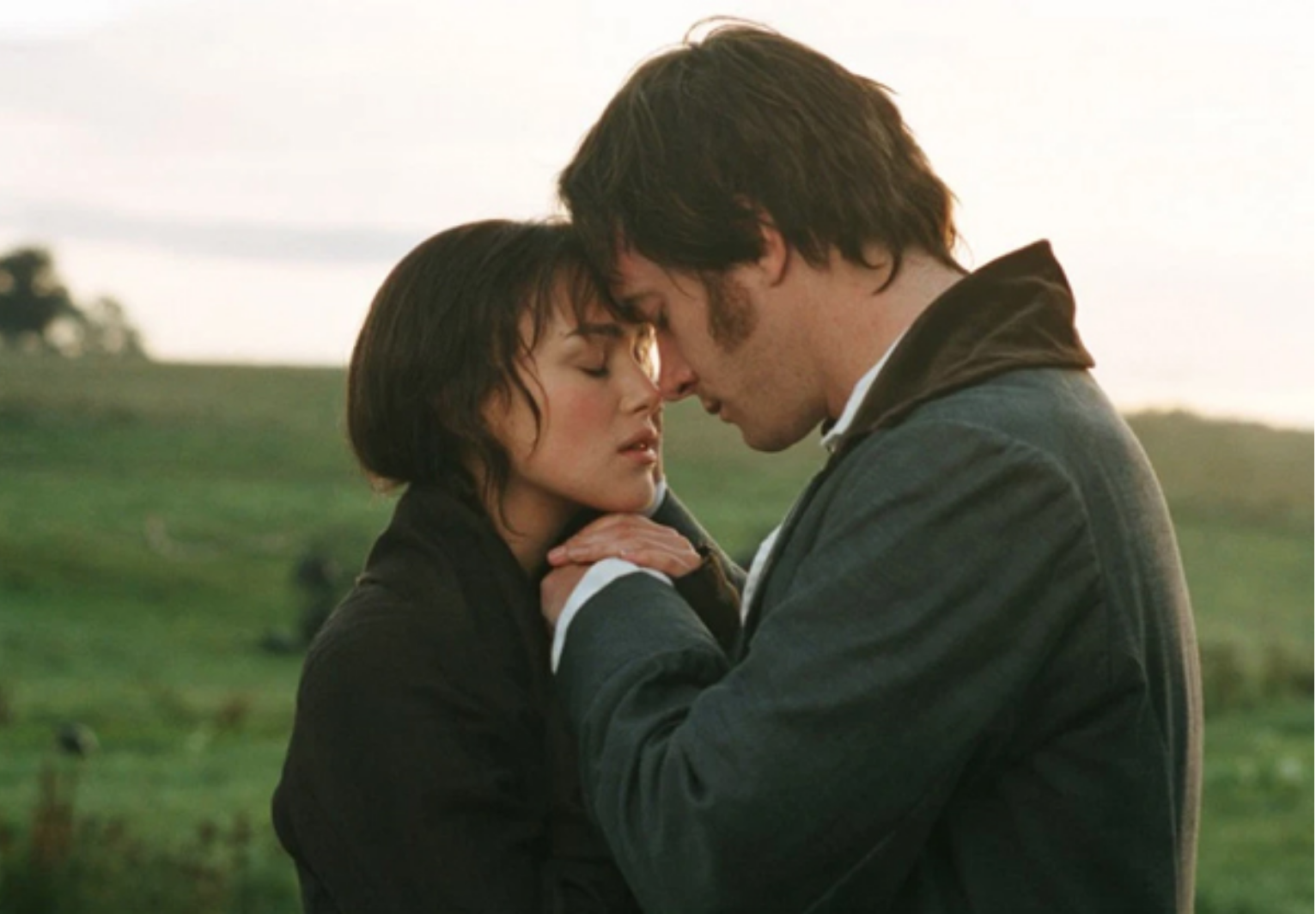
Top Ten First Kisses

I recently wrote a post on first kisses for Romance.com.au, and thought I’d share it here. What are your top ten first kisses from movies and books? Ever since I wrote the post, I’ve thought about the kisses I missed out, but I think these ten are certainly among my score or two of favourites!

Click HERE for a link to the post!

Screen Shot 2019-11-12 at 3.56.45 am.png

Book Launch for Up on Horseshoe Hill: 24 November

Anna’s Shop Around the Corner in Cronulla is a gorgeous place to send Up on Horseshoe Hill out into the world. This event will take place at 2.45pm on Sunday 24 November. Bagpipes, champagne, book talk and more. Copies of Up on Horseshoe Hill will be available for purchase and signing, and Anna and I would love to see you there!

Up On Horseshoe Hill - 1080x1080_2.jpg

Our Inspirational Environment

IMG_8156.JPG

Many thanks to novelist Jennifer Schoullar for having me on her blog recently. The environment plays an important role in all of Jennifer’s books, and she invited me to write something about that too. Wild animal conservation, wattle, Antarctica and a ghost gum dilemma gave me plenty to write about!

I grew up in the northern beaches peninsular district of Sydney. It was well after horse and cart days—but was a time when, if there was a vacant block of land down the road, it was perfectly acceptable to keep your horse there. I sometimes rode my pony to school, tethered him next to the oval and rode him home again. When I was fourteen, my family moved to Victoria and we lived in a semi-rural district with a goat, a cat, two dogs and a number of horses. My teenage friend Rina (and our horses), were inseparable for many years and we showed and competed together. Rina still competes in dressage, and has had a great deal of success with thoroughbred ex-racehorses. I always look forward to visiting her property and spending time in her stables!

IMG_2268.JPG

The natural environment has played an important part in all of my novels. It was when I was working as a legal academic and teaching in a course, ‘The International Legal Regulation of Climate Change,’ that an idea formed for In at the Deep End. Antarctica had always been of interest, and I wanted to portray how important this unique and pristine environment is, and how rising water temperatures threaten not only Antarctica, but the rest of the world. My challenge as a writer was tackling these concepts in an accessible way. What would happen if a climate scientist and an environmentalist, with a similar agenda but very different ways of seeing things, fell in love? In at the Deep End not only explored climate change and relationships, but also charted the challenges faced by the 1900s explorers Robert Falcon Scott and Roald Amundsen’s ‘race to the South Pole.’ Amundsen was successful, but Scott and his team died in their attempt. Scott’s diaries provide a fascinating account of his journey.

In On the Right Track the lead character is named Golden by her grandfather—an amateur botanist—after acacia pycnantha (golden wattle). I researched and learned a great deal about native flora while writing this novel, and exchanged many emails with a CSIRO scientist who was a specialist in eucalypt propagation. I’d written a ghost gum into my story, set in a rural district in the South West of NSW, and while I knew ghost gums were uncommon in my home state, I didn’t realise exactly how uncommon! The planting of a ghost gum, and its early care, has to be carefully considered for it to have any real chance of survival, but, once my scientist worked out that I had my heart set on this species of gum, he did all that he could to tell me what I had to do to ensure the fictional version survived!

A plant I learnt a lot about while researching my Christmas novella, The Six Rules of Christmas (part of the HarperCollins Our Country Christmas anthology), is mistletoe. Unlike England, which has only one variety of this mistletoe, Australia has many varieties, many of which mimic the look of the host tree through leaf size and shape. As a parasitic plant, mistletoe is often thought to be harmful to the host plant, but it rarely harms a healthy tree, attracts bird life and can be an important source of nutrients.

Screen Shot 2018-03-15 at 1.17.35 pm.png

My November release, Up on Horseshoe Hill is set in the Central West of NSW, and tells the story of a farrier, and a geneticist vet who specialises in wild animal conservation. I learnt a great deal about the hoof treatment of wild animals while researching this novel. Many animals kept in zoos as part of conservation programs have to be anaesthetised when they require treatment, but keepers and handlers increasingly use cooperative reinforcement (not involving force or compulsion, but incentives in the form of reward) in order to avoid anaesthetic. In this way, for example, a giraffe or elephant will place their feet into positions that allow farriers and vets to work on them safely.

My next title will focus on the Macquarie Marshes, a wetlands region in the north of NSW. I’m doing a lot of reading on the environmental importance of wetlands, and planning a road trip (my favourite part of research), in the next couple of months!

P1020822.JPG

Ruby win for On the Right Track!

Celebrations with fellow authors Pamela Cook and Rae Cairns

On the Right Track won the Romantic Book of the Year (the RuBY) in the contemporary romance category of the Romance Writers of Australia awards on 10 August, 2019. To say I was delighted is an understatement - but that will do for starters!

I was honoured to have been a finalist with fabulous writers Kelly Hunter, Madeleine Ash, Jacquie Underdown and Elisabeth Rose, so the fact that On the Right Track was the winner was very much the icing on the cake! What was also wonderful were the kind words and hearty congratulations from so many other writers on the night, and at the RWA conference. I’m celebrating with fellow authors Pamela Cook and Rae Cairns in one of these photos (I’ll spare you the ones of me on the dance floor later in the evening!)

Screen Shot 2019-08-13 at 11.05.42 pm.png

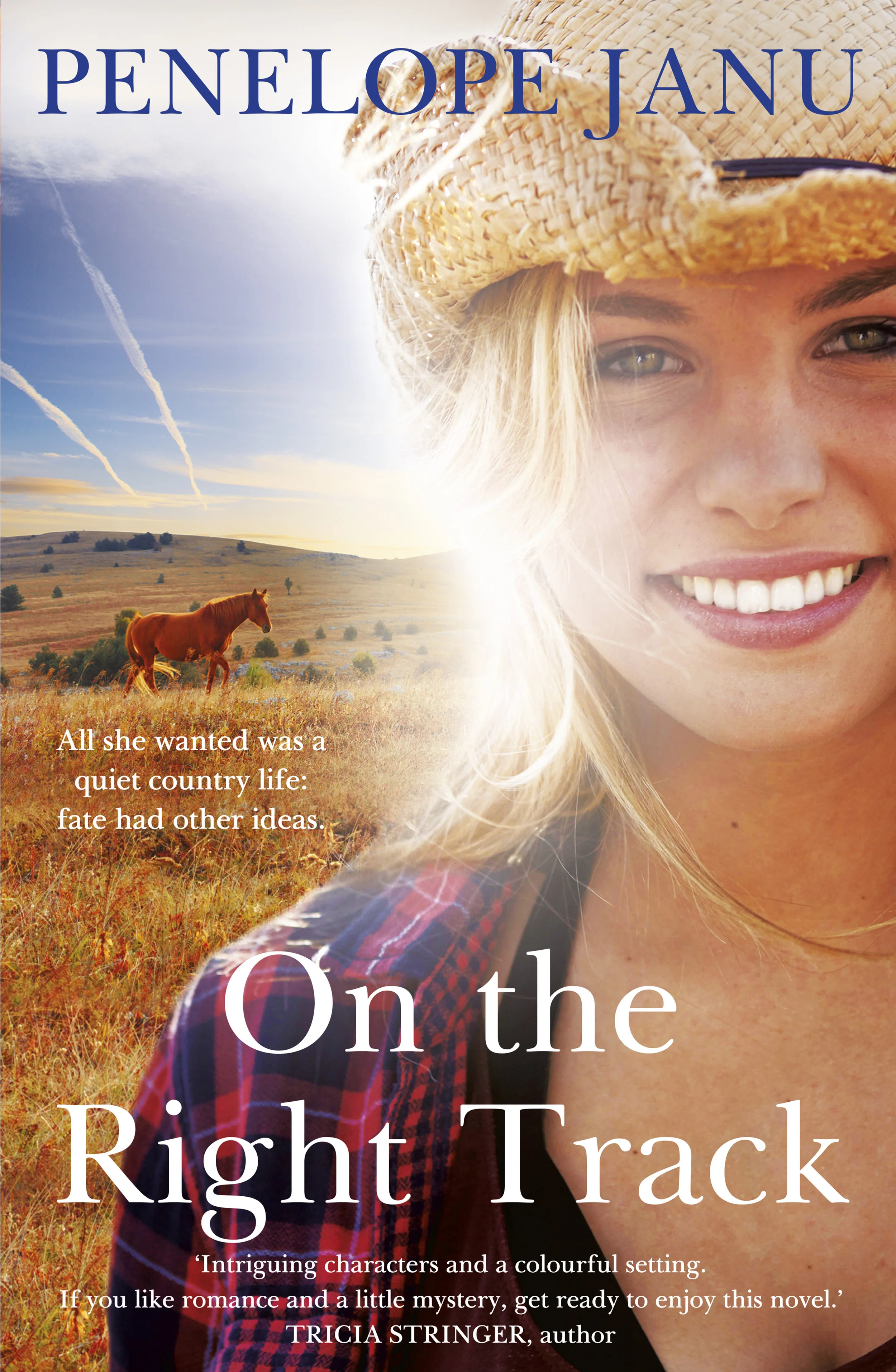
On the Right Track was a lot of fun to write, and gave me the opportunity to reflect on so many happy childhood memories when I spent all my spare time with my horses. I even used one of my pony’s names in this On the Right Track - Fudge (Mr Fudge was my pony’s show name, and he was a palomino like the horse in the popular television program, Mr Ed).

I arrived home to a big task - the proofread for Up on Horseshoe Hill which will took quite a few days. And now? I can’t wait to get stuck into my next book (which has only been on the back burner for a couple of weeks, but it feels like much longer so I’m missing my characters terribly!).

My lovely RuBY trophy is on my bookcase, I have some lovely memories of celebrations with friends, and I’m so happy that winning this award will let other readers find out about Golden and Tor, my much loved characters from On the Right Track.

RbyBlu_Win_2019.png

Writing friends ...

On Thursday morning at 8.30am, I will be flying to Melbourne. Why?

Because that’s where the annual Romance Writers of Australia Conference is on this year. My first conference was in Sydney’s Darling Harbour a number of years ago. I was very much a wallflower. I didn’t know anyone, I wasn’t on Facebook (or anywhere else on-line) and hadn’t ‘connected’ to any other members beforehand. I barely spoke to a soul through Friday. And Saturday. But on Sunday afternoon (at the final workshop) I met another ‘newbie’ (a first time conference attendee). And she introduced me to another newbie. So in the next session, the closing address, there were three of us. Brigitte Underwood-Legeron. Sandra Edgar. And me.

The 2018 Cocktail party theme was Glitz and Glamour. Brigitte wore her bridal gown. And we thought I made a pretty good bridesmaid!

The 2018 Cocktail party theme was Glitz and Glamour. Brigitte wore her bridal gown. And we thought I made a pretty good bridesmaid!

Sandra lives in Queensland and writes contemporary and historical romance. Brigitte lives in Perth and writes literary fiction and contemporary romance. We’ve been friends for five years now. And our friendship is attributable to RWA.

Since meeting my very first friends, I’ve been so fortunate to have found many other wonderful writing friends too. Many friends are writers I’ve admired as authors for years. Because as anyone will tell you, romance writers as a group—what is the collective noun? A heart? An embrace?—are smart, funny, generous and an all round lovely group of people.

The craft we learn and the books we write are important, but it is the friendships we make that are what we tend to treasure in life. Writing can be a very lonely business, so personal connections are particularly important. And in RWA I’ve been so fortunate to have shared my writing journey (all the highs and lows) with a wonderful group of people.

But … I really was a wallflower. Would I have continued going to the RWA conference if not for my dear friends Brigitte and Sandra? I really can’t say. But knowing they would be there at my second conference might well have got me over the line.

I pitched In At The Deep End to my publisher at that second conference—the start of my published writing career. And I’ll always be thankful to my newbie friends for their encouragement and support.

Ruby finalist: On The Right Track

So this happened … I was delighted to have been announced as a finalist in the Romance Writers of Australia RuBY (Romantic Book of the Year) award in 2019 (in the Contemporary Romance category) for my Harlequin Mira/ HarperCollins novel, On The Right Track. This award is the premier award for a romance published in 2018, and is judged by reader judges. It is SUCH an honour to have made the finals, and I look forward to attending a dinner on 10 August 2019 with the other four wonderful finalists, when the winner will be announced.

Can’t wait!

Screen Shot 2019-07-10 at 2.10.01 pm.png

November release: Up On Horseshoe Hill

IMG_2162.jpg

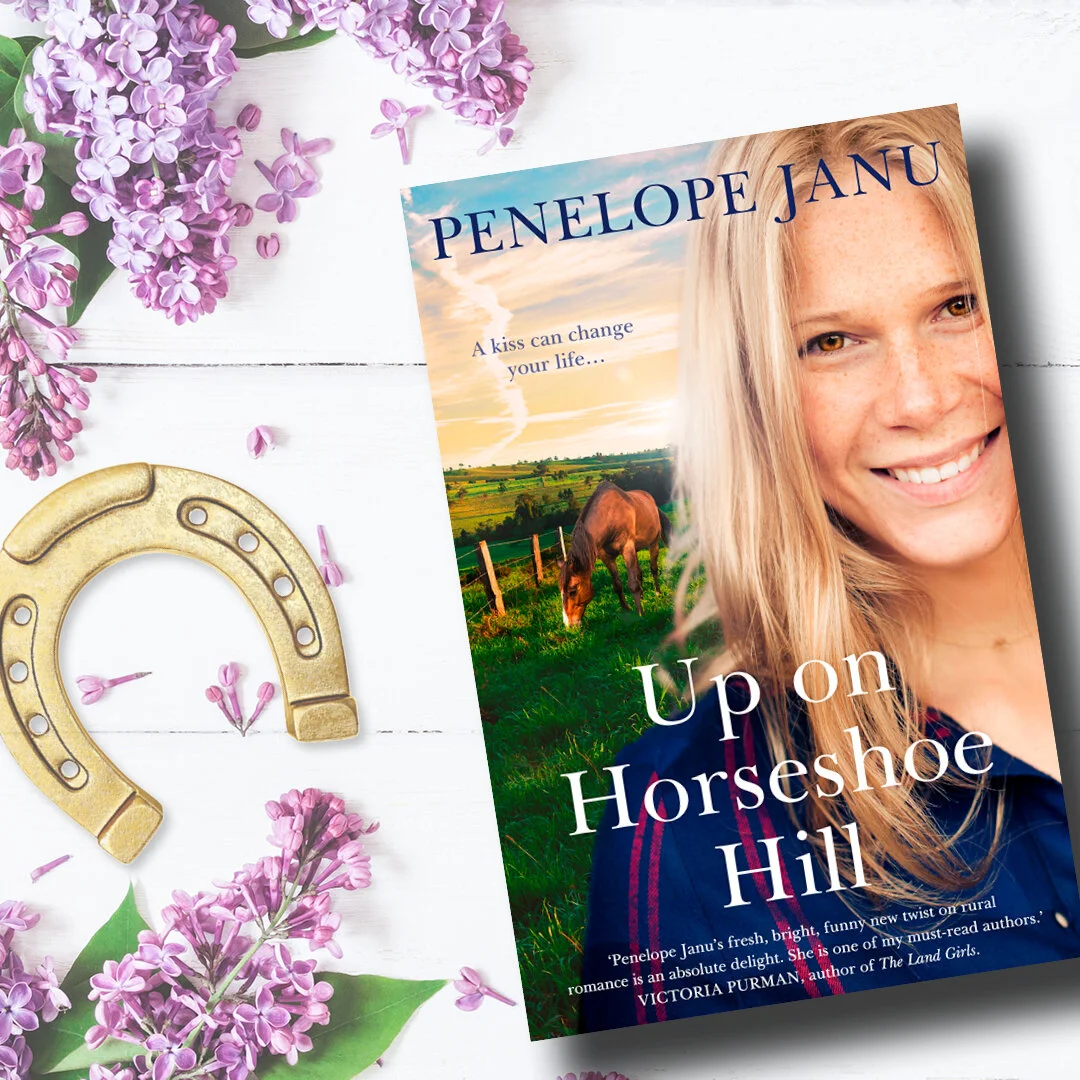
Up On Horseshoe Hill, which will be on the shelves - and available as an ebook and audiobook (more on this in another post!) - will be out on 18 November. It’s so exciting when a book has a cover! If you would like to pre-order the book to ensure it jumps into your kindle on 18 November, or arrives on your doorstep around this date, please CLICK HERE for links. You can also order at your local bookstore, or ask your library to order the book. As many readers know by now, I get just as much pleasure from seeing my book on a library shelf, as I do on seeing it on the shelves in a bookstore.

Screen Shot 2019-07-11 at 9.52.59 pm.png

I find the thought of launching a new book a strange combination of relief, joy and trepidation.

Relief in that I don’t have to read the manuscript yet again (100,000 words takes a few days out of my week …), and I can look forward to working on my next book.

Joy because a book release coming up means readers have the chance to get up close and personal with my characters (like I have been for a year or two …).

Trepidation because … it’s judgment time! Much as Up on Horseshoe Hill has been praised by the readers that have taken a peek between the covers so far, and my editor and my publisher are really excited about it, I find book reviews a little confronting. Much as I love writing, I don’t particularly like telling people what a fabulous book I have written (it’s just not me!) so I hope that others will do that for me.

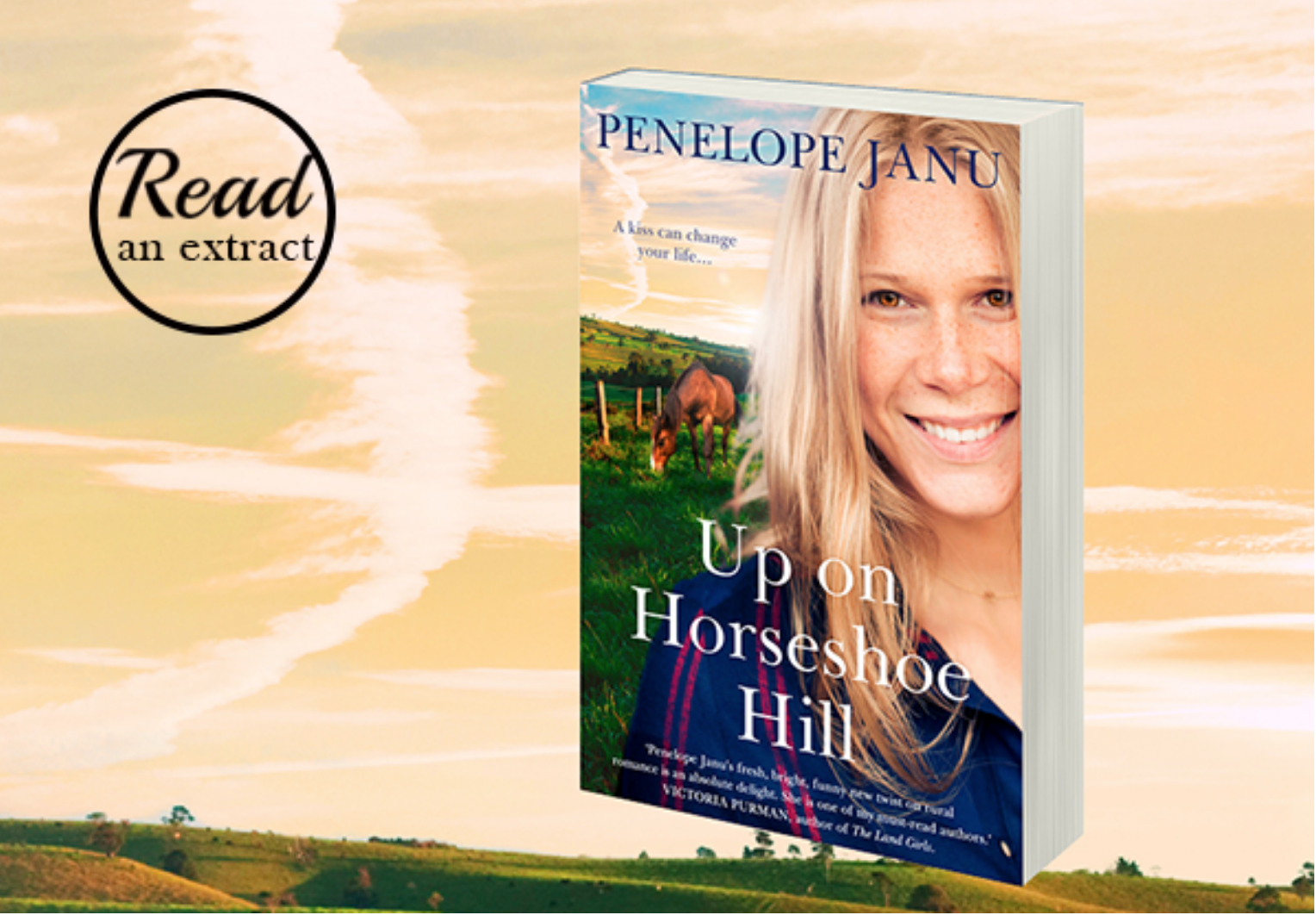
And finally on the release … I love this cover! Firstly because Victoria Purman, whose novels I have read and enjoyed for years, was kind enough to give the book a wonderful endorsement. I first knew Victoria as a writer of novels set in a coastal town in South Australia. These contemporary novels feature a wonderful bunch of characters (look up the Boys of Summer series!). More recently, Victoria has written page turning stories of Australian historical fiction, including the novels, The Last of the Bonegilla Girls, and The Land Girls, both published by HQ (HarperCollins). And the other reason I love the cover? Because there is a horse on the cover, and (even though it is up to readers to imagine what the characters actually look like) I think the model has a really nice natural look, which reflects the main character, Jemima (Jet) Kincaid really well.

Author Talk: Thursday 15 August

I can’t wait to join the delightful duo Cassie Hamer and Joanna Nell for an author event on Thursday 15 August from 6.00 - 8pm at Manly Art Gallery and Museum. It’s a brilliant venue right opposite the beach, and we’d love to see you there.

Screen Shot 2019-07-17 at 12.09.46 pm.png

Cassie’s debut novel, After The Party, was published by HQ (HarperCollins) earlier this year to critical acclaim. Joanna’s first novel, the bestselling The Single Ladies of Jacaranda Retirement Village, was published by Hachette last year, and her newest release, The Last Voyage of Mrs Henry Parker, will be released in September. Cassie is a journalist, Joanna a medical doctor, and my background is in law, and we’re planning a lighthearted chat about change - the chaos, camaraderie and challenges of embarking on a career in creativity. Click on the link below if you’d like to come along. We hope to see you in Manly!

Here is the link: Manly Author event.

Up on Horseshoe Hill cover reveal coming soon!

Photo credit Paolo Nicolello

Photo credit Paolo Nicolello

A new cover is always an exciting time. And much as I love the pony hiding behind the forelock, I can’t wait to launch Up On Horseshoe Hill into the world. Especially because early links for the book are coming out on bookseller sites and in other places in cyberspace, and the blank page with ‘cover coming soon’ is starting to annoy me!

Screen Shot 2019-06-27 at 9.33.09 am.png

Creating a cover is a complex business in publishing, and I pretty much rely on my lovely publisher to come up with their concept. Yes I always have a few ideas - my novel’s covers have all portrayed a woman facing the camera, so I like the age and colouring to be right, much as readers will put their own spins on those things - but the rest I am very happy to leave to the creative minds at HarperCollins! I know this cover will be ‘rural’ in terms of the backdrop, and I am very happy with that. Will Jet be wearing a hat or not? I’ll have to wait and see.

All will be revealed very soon, in anticipation of the late November release of Up On Horseshoe Hill!

Legal Beagle: High Seas Dramas part two

Those following the Legal Beagle columns I post here ( I write these for the fabulous Romance Writers of Australia magazine, HeartsTalk), will know they aren’t written as legal advice, but tips that might be useful to writers dealing with similar issues. Because legal issues come up all the time! Here is an excerpt of an article I recently wrote on the law of the sea:

Aidan Turner (Ross Poldark)

Aidan Turner (Ross Poldark)

Some of the principles on the law of the sea are centuries old and will, I hope, be of interest to both contemporary and historical romance authors.

The world currently has a commercial fleet of over 90 000 vessels. Greece is the largest ship owning country, followed by Japan, China, Germany and Singapore. This could explain why decades of Mills & Boon titles have featured Greek shipping tycoons as heroes! Writers of historical fiction have also written gripping historical tales about the passage of ships across oceans.

The ocean, always intrinsic to trade and commerce, covers over seventy per cent of the earth’s surface, and most of the world’s population lives within a few hundred kilometres of the coast. So who has command of the sea? The doctrine of ‘freedom of the seas’ can be traced back to the seventeenth century, and is based on the idea that, besides a nation’s rights and jurisdiction (power) over ‘strips of sea’ adjacent to their coastlines, the seas belong to no one.

Technological developments, particularly from the mid-twentieth century, facilitated the exploitation of offshore resources, and the width of the ‘strips of sea’ became increasingly problematical as nations sought to extend their claims over the oceans. With rising populations, issues such as the depletion of fish stocks by long-distance fishing fleets, and environmental concerns surrounding pollution and waste from oil tankers and other commercial vessels, were also contentious. The development of weaponry on naval and other craft, as nations sought to use the ocean to pursue (increasingly long range) military objectives, was another matter of concern.

Demelza Poldark (Eleanor May Tomlinson)

Demelza Poldark (Eleanor May Tomlinson)

            Enter the United Nations, and its efforts to legally define the uses of the oceans for the ‘individual and common benefit of humankind.’ Cooperation between nations was intrinsic to laying down international law in respect of the ocean. Many nations signed a treaty banning nuclear weapons on the seabed, and acknowledging that all resources of the seabed are ‘the common heritage of humankind.’ Decades of negotiation went into the UN Convention on the Law of the Sea, which was finally adopted by the UN in 1982. This Convention, or international treaty, means that a clear set of laws applies to water resources. There are over 165 countries that are signatories to the Convention and they are bound by its principles. The Convention provides for:

·      An exclusive territorial sea boundary of 12 nautical miles (22 km). Nations can enforce their own laws and use resources within this offshore zone, which includes the seabed and its subsoil, and the air above it. It covers elements like fishing, mineral rights, and sea floor deposits.

·      A Contiguous Zone of 24 nautical miles offshore, which can be used to enforce laws on matters like immigration, customs, and pollution.

·      An Exclusive Economic Zone gives a nation limited rights over areas of up to 200 nautical miles offshore (provided there is no clash of rights with any coastal neighbours that ‘share’ the same zones).

Notwithstanding these outcomes, the UN Convention allows for ‘innocent passage’ through ocean waters by foreign vessels, provided they do no harm to the relevant nation, or break its local laws. UN bodies have been established to settle disputes between nations regarding the zones, their ‘boundaries,’ and activities within them, and also to develop a body of law that will be universally adopted and implemented.

Principles on the law of the sea are relevant to crimes committed at sea, the arrest and sale of ships, the salvage and recovery of ships lost at sea, and the prosecution of those responsible for environmental damage. Ships that operate in Polar waters (increasingly important because of the proliferation of cruise ships in polar regions) are now regulated by the UN Polar Code.

And to add to my last column… Why does the law treat flotsam, jetsam and derelict differently? Poldark anyone? There was an episode in an early season where debris was washed up on the Cornwall shore after a shipwreck, and villagers waited patiently on the sand to retrieve it. What law would apply?

Under traditional maritime law, there are distinct types of marine debris. Jetsam (the word is related to ‘jettison’) is an item deliberately thrown overboard (to lighten the load of a ship, for example). Flotsam refers to debris in the ocean that got there as a result of a shipwreck, or accident. If ever found, flotsam can be claimed by the original owner (because they never intended to relinquish ownership). In the case of jetsam, the finder will likely get to keep the item, as it was relinquished with the intention the owner would never be able to reclaim it. Derelict is another kind of debris, and is property deliberately deserted at sea by those in charge of it (so it is effectively abandoned).

Our current law is a little different from the Poldark situation. Under the UK Merchant Shipping Act, 1995, for example, there is an obligation to notify the authorities of property recovered from the ocean, and there are regulations around reporting wrecks as well.

All this is fascinating stuff, and much as I’d love to talk about Ross and Demelza Poldark in more detail, I’ve run out of space….

ARRA Awards 23 February

Screen Shot 2019-01-15 at 9.02.55 pm.png

I was delighted to be nominated in the 2018 Australian Romance Readers Awards. In three categories! Firstly, for Favourite Australian Romance Author (with other writers I’ve worshiped from afar for too many years to mention!), Favourite Australian Romance, for On the Right Track, and Favourite Laugh Out Loud moment in a romance, for On the Right Track. The awards will be held on 23 February, and I’m really looking forward to catching up with many reader and writer friends.

On The Right Track.jpg

ARRA is a wonderful organisation for readers, with chapters in most capital cities. It’s very inexpensive to join, and provides a host of wonderful opportunities for readers to discuss books, on-line and in person, and meet many favourite authors at functions all over the country - from Australia and also overseas guests.

I’ll keep you posted on what happens at the awards!

Book launch: On the Same Page

IMG_1327.JPG

So… I love having parties for other people, but for myself? Not so much. But as On the Same Page was my third full length novel, and I’d recently also had a novella published as part of the Our Country Christmas anthology, I thought I’d give it a go!

Not playing football, but making a speech!

Not playing football, but making a speech!

The venue was Better Read Than Dead, a fabulous bookshop in the busy heart of Newtown. I love this shop, but being given the opportunity to have the launch here was particularly special because On the Same Page is set in Newtown, Redfern and Sydney city, a very busy bustling hub, just like the busy bustling pace of On the Same Page!

IMG_1339.JPG

All of my children attended the event which was wonderful. One daughter drove up from her workplace in Canberra, and another daughter juggled two toddlers and endured an hour of peak hour traffic to be there. There were lots of friends who came along too (and made comments like ‘I knew her before she was famous’ (ha!), and there were a number of writer friends as well. Some writers I had met while studying creative writing at UTS Sydney (also close by!), and some I have met as a published author. It was heartwarming to have their wonderful support. And, of course, there were readers I’d never met before, but they had enjoyed my books so came along to celebrate the publication of another. Wow! I often chat with readers by email and on social media, and at conferences and so on, but it was really nice to meet some new people, and even have the chance to introduce them to other writers they admired - and my family of course!

The venue space was wonderful - to be surrounded by books while launching my book upstairs, while shoppers were downstairs browsing the shelves, and buying books for Christmas, was great. The champagne flowed, the Lebanese dips were amazing, and I signed a lot of books.

Will I have another launch? I will seriously think about it!

Legal Beagle: Cruise ship dramas

Those following the Legal Beagle columns I post here ( I write these for the fabulous Romance Writers of Australia magazine, HeartsTalk), will know they aren’t written as legal advice, but tips that might be useful to writers dealing with similar issues. Because legal issues come up all the time! Here is an excerpt of an article I wrote on cruise ships. What happens if there is a death or crime on board?

IMG_1339.JPG

If you are planning to set a novel on a cruise ship, if your characters go overseas for work or pleasure, or if one of your characters dies while on a ship or on an overseas holiday, I hope you’ll find something to interest you in this month’s column.            

Many cruise ship companies operate in Australian waters, and carry thousands of Australian passengers each year, but they are overwhelmingly owned and operated by overseas interests, primarily based in the US and the UK. The ships, however, are highly unlikely to be registered in these countries. They will be registered in ‘flag States,’ or ‘flags of convenience,’ countries like Panama, Bermuda or Barbados, with little or no control over the cruise ship day-to-day operations. Why? Often because it’s cheaper to register in flag states, and the regulatory requirements are less onerous.

If a crime is committed on a cruise ship (given the number of people on board, this is not an irregular occurrence) it can be difficult to work out who is responsible for the investigation and prosecution of crimes. And to add to the complexity, there are many possible laws that will apply to any crime. There is international law, in the form of The United Nations Convention on The Law of the Sea 1982, the law of the flag state, the law of the countries of the citizens involved, and often the law of the port the ship is either leaving, or sailing towards. Here is an example of what can occur:

Annabel, an Australian citizen, books a ten day cruise on The Princess Charming, a ship owned by a US company, and registered in Bermuda. Annabel boards at Circular Quay in Sydney. The ship is only a few nautical miles from New Caledonia when Sigrid, a citizen of Sweden, assaults Annabel (Sigrid claims she committed the act because Annabel spiked her drink the night before). Annabel sustains a broken arm. What law applies?

The law of Bermuda will apply because that is where the ship is registered. The law of New Caledonia will apply because, within the 12 nautical mile zone, the ship is in New Caledonian waters. Australian law would apply because Annabel is an Australian citizen. Swedish law could also be relevant, as the perpetrator of the offence is a Swedish citizen. The ship is owned and run by a UK company, so the laws of that country would also be relevant.

So… there will be a multitude of jurisdictions operating concurrently. A ship will always be subject to the domestic laws of the country in which it is flagged (there are no Australian flagged cruise ships), but while in territorial waters it may also be subject to the laws regulating those waters, and ports. If it is in international waters, those laws will come into play. And in the case of a crime being committed, the perpetrator and victim’s countries of citizenship will have jurisdiction to investigate and prosecute. So there will be ‘competing jurisdictional claims.’ The countries themselves will have to work out who takes action, and which jurisdiction and laws will apply (often the flag state doesn’t want to get involved—it doesn’t have the resources, interest or will to do so).

On a side note, most people are familiar with the notion that if you commit a crime in another country, you will be liable under the laws of that country. The same concepts apply on a cruise ship, and ignorance of the law will never be an excuse. This means that, for example, some medications or recreational drugs allowable in one country might be prohibited substances in another country, and this will be relevant when the ship sails into that country’s territorial waters.

Felix, an Australian citizen, has planned a ‘trip of a lifetime,’ a cruise to Antarctica, for years. He boards a cruise ship (owned by a British company and registered in Malta) in Argentina. He has been on the ship for three days, and is in international waters, when he dies of a heart attack.

Death at sea from natural causes, particularly given the demographic of many cruise passengers, happens relatively frequently. All cruise ships are required to have a suitable storage area should a death occur on board.

What happens to a deceased person’s body will depend on the laws that apply on the ship, and in the next port of call.  That destination port might allow the body to be handed over. Or it might refuse to take the body (smaller countries without appropriate storage or repatriation facilities often reject a body). Should the body be unloaded (and, anecdotally, it appears that this will be the preference of the cruise ship company) the family will bear the full cost and responsibility to bring the body back to the home country. This is where travel insurance will be important!

The message from this month’s column is… should a crime be committed on a ship, or a death occurs on board, there are no simple answers to how things might turn out. The romance aspects of cruising are easy to see. But criminals and coroners, diplomats and detectives, could also be part of the mix! Romantic suspense, anyone?

The story behind On the Same Page

XO007_Same_Page_Cover_01.jpg

On the Same Page has been a long time coming, but is a story I've always had faith in - and I'm absolutely delighted that it's not long now until it will be out in the world. I started writing On the Same Page (working title Lars from Iconic) when I was a student at UTS studying creative writing. This was my 'break away' from academic and legal work and (together with a weekend course I did with Lisa Heidke at the Australian Writers Centre, where the concept was created) has led to years of new challenges. I've been taken out of my comfort zone many times - but have been rewarded with countless opportunities along the way. And one of the most exciting of these? To see characters and situations I've thought up in my head, transferred to the page, and ultimately to readers (and hopefully into a special place in their hearts and minds as well).

On the Same Page won the 2017 XO Romance Prize. But that wasn't its earliest prize .... I wrote the first draft of the manuscript in 2014 and I think my poor kids suffered with me every time I had to workshop snippets of it in class. There were many groans of Mummmmm. But so much encouragement as well. 'Yay Lars!' was a common refrain. Lars Kristensen is the hero of On the Same Page (yes another Norwegian - though he was brought up in England) but the book is set in Australia, and Miles Franklin, a twenty-eight year old lawyer, is the heroine. But back to the prize ... for my birthday in 2014, one of my daughters, Gabriella, gave me this card. I am so glad I photographed it - but regret not hanging onto the original! You will note that I am already dubbed a 'best selling author' with a golden sticker to prove it - and this happened before I wrote In at the Deep End or On the Right Track (as I mentioned, On the Same Page took a while to finish off!) Thanks for your faith in me, Gabi - and also in the book. 

Artwork: Gabriella

On the Right Track release

IMG_6016.JPG

The launch of a new book is always an exciting time, and it's been wonderful to see On the Right Track on the bookshelves in the past few days! I think my children might be relieved to see the book out on the shelves - because it signifies that the story is now out of my hands, and into the hands of readers! Thank you to those who have purchased the book already, and do let me know if you have enjoyed it. Thanks to those who have left reviews on Goodreads or Amazon already - these mean so much to a writer personally, and are useful to other readers as well. I hope you have a wonderful reading month!

IMG_0075.JPG
Screen Shot 2018-06-20 at 6.29.12 pm.png